José Luis Cortés, a prominent researcher, is recognized for creating the first human embryonic stem cell lines in Andalusia . Thanks to the innovative use of laser technology, he has achieved a global milestone.
In this interview, Cortés details his role in the development of human embryonic stem cells, as well as the promising applications they offer in medical research. He also addresses the ethical and legal aspects of this field, while reflecting on the future impact of the research on our understanding of human biology.

- What does molecular and cellular biology consist of, and what is its relevance in research with human embryonic cells?
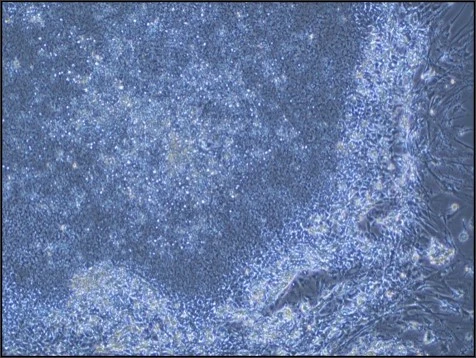
All scientific research is multidisciplinary. Therefore, to publish results, both molecular and cellular experiments are performed. Molecular experiments yield results of a genetic nature, while cellular experiments show how cells behave based on that genetic condition. In the case of human embryonic stem cells, we observe their growth and morphology under a microscope and verify their undifferentiated and pluripotent genetic nature. Thus, we demonstrate that they can differentiate into any cell and tissue of the organism. - What are human embryonic stem cells and what has been your role in their creation and development?
Human embryonic stem cells are a group of cells found in the pre-implantation embryo, specifically in the blastocyst stage, forming the inner cell mass. These cells—before developing into the future fetus and baby—are undifferentiated, but they can differentiate into all tissues of the body. As a researcher, my role has been to isolate this group of cells, maintain them in an undifferentiated state, and create cell lines that are preserved over time in a biobank. These cell lines are available to any researcher who needs them. - What are the most promising applications of human embryonic cells in science?
The researchers involved in these studies hope that a cell therapy using these cells will be available in the future with a guaranteed success rate. Currently, these cells are an unprecedented tool for creating organoids in the laboratory, which simulate organs and allow us to study disease models in vitro. However, this is not yet possible, as much remains to be learned about potential patient rejection of these cells or the risk of tumor formation. - The concept of human embryonic stem cells raises ethical and moral questions. Are there laws that limit or hinder research into the development of these cells?
Yes. Isolating the inner cell mass of a blastocyst means it will not be used for reproductive purposes. The use of these blastocysts is regulated by Law 14/2006 on Assisted Reproduction and Law 14/2007 on Biomedical Research.
Thus, researchers must submit a research project that goes through various scientific and ethical committees to be approved and receive a research grant. Essentially, it's a highly regulated process governed by international scientific research laws.

- Regarding the moral debate, what ethical aspects can defend research in this field?
A segment of society opposes this type of research because it uses human embryos. However, these embryos are cryopreserved in nitrogen tanks at fertility clinics. Given the potential of embryonic cells in regenerative biomedicine, their use in treating diseases has been proposed, always within ethical and moral boundaries. For example, reproductive cloning is prohibited by the international scientific community. - What is your opinion on the constant progress of research in this field and how do you think it will impact the future?
Science is fascinating because it advances at an incredible pace, with new discoveries almost daily. But it's also perplexing, because it produces these discoveries when we still know almost nothing about the natural embryo. As Patrick Steptoe, a pioneer of in vitro fertilization, said in 1978: "We are at the end of the beginning, not at the beginning of the end." Time is proving us researchers right—those of us who dedicated ourselves to deriving embryonic cell lines. We are getting closer and closer to cell therapies using these cells, although we must remain cautious. - What impact do you think this line of research can have on the understanding of the biology of the human body?
Many research groups are dedicated precisely to this: learning more about our biology and our specialties. An example of this is the latest work I collaborated on, published in Science, where we demonstrated the evolution and antiviral activity of a human protein of retroviral origin in the human embryo. - In a broader sense, what effects would the creation of human embryonic cells have on society in terms of ethics, regulations, and medical advances?
Throughout history, we have experienced significant advances, especially in medicine, but also scientific malpractice. Clear regulations defining ethical boundaries are crucial. An international consensus on this matter is necessary, which is sometimes lacking between Western and Asian countries, with the aim of improving quality of life, extending life with well-being, and finding cures for diseases. Many thanks to Proquinorte for giving me the opportunity to share my experience and knowledge in this area of research.