Studying DNA damage and the cellular response to repair it is key in molecular biology, cancer research, and the development of new drugs. Single-strand breaks (SSBs) and double-strand breaks (DSBs), as well as other chemical modifications, can compromise the genomic stability of cells and lead to cell death if not properly repaired. To understand these processes, Revvity has developed the PhenoVue™ DNA Damage Response Staining Kit .
Do you study how cells detect and repair DNA damage through response pathways? Do you want to monitor the activation of DDR pathways or screen for genotoxic drugs? If so, read on.
Why is it important to analyze DNA damage?
Cells possess a sophisticated mechanism known as the DNA damage response (DDR) to detect and repair lesions in their genetic material. One of the first events following a double-strand break is the phosphorylation of H2AX , which leads to γ-H2AX , a widely used marker for identifying these breakpoints. This process also recruits key proteins, such as 53BP1 , which help coordinate DNA repair. Studying these markers is essential for advancing our understanding of cancer biology, genomic stability, and the action of new treatments.
What does the PhenoVue™ DNA Damage Response Staining Kit offer?
The PhenoVue™ DNA Damage Response Staining Kit has been designed to facilitate the analysis of DDR using high-content imaging techniques.
The kit includes:
🔹 Specific antibodies against γ-H2AX and 53BP1, validated for use in cell assays.
🔹 PhenoVue Hoechst 33342 for accurate nuclear staining.
🔹 Optimized fluorophores (PhenoVue Fluor 488 and Fluor 647) that ensure a clear signal without spectral overlap.
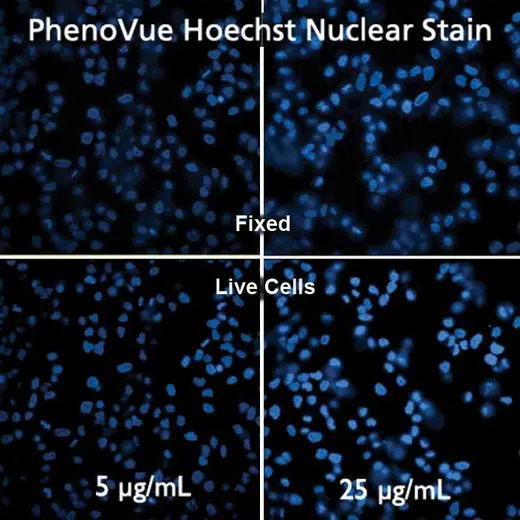
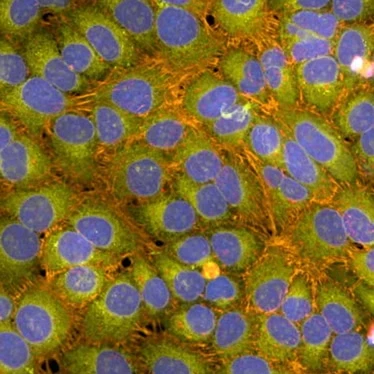
Thanks to this combination, the kit allows for high-quality imaging that clearly shows the nuclear foci where DNA repair activity is concentrated. It is compatible with other fluorescent dyes, expanding the possibilities for multiparametric assays.
How is it applied in the laboratory?
The workflow is simple and optimized for laboratories using high-resolution, high-content analysis systems such as Opera Phenix™ Plus or Operetta CLS™ :
1. Cell fixation and permeabilization.
2. Incubation with primary antibodies against γ-H2AX and 53BP1.
3. Hoechst staining and fluorescent secondary antibodies.
4. Image capture and analysis.
This kit is ideal for genomic stability studies, screening of antitumor drugs , or genotoxic toxicity assays.
Where can our team help you?
If you would like more information about the PhenoVue™ DNA Damage Response Staining Kit , its use in different protocols, or its compatibility with your laboratory's imaging systems, our team of specialists will be happy to advise you . If you are interested in learning about other cell staining kits, please contact us and we will help you find the one that best suits your needs.